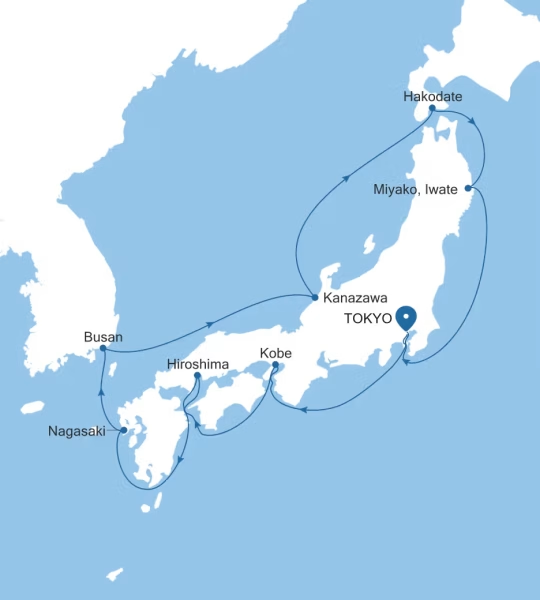
DAY 8 – BUSAN, SOUTH KOREA
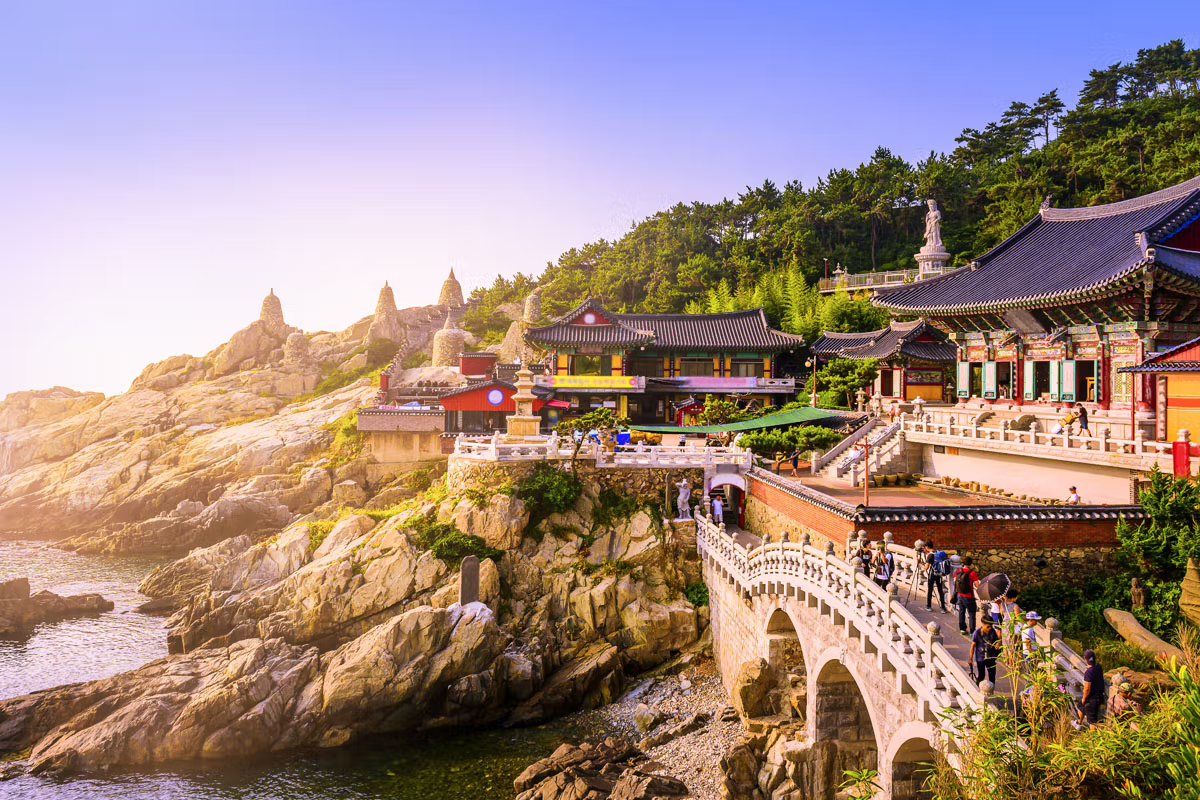
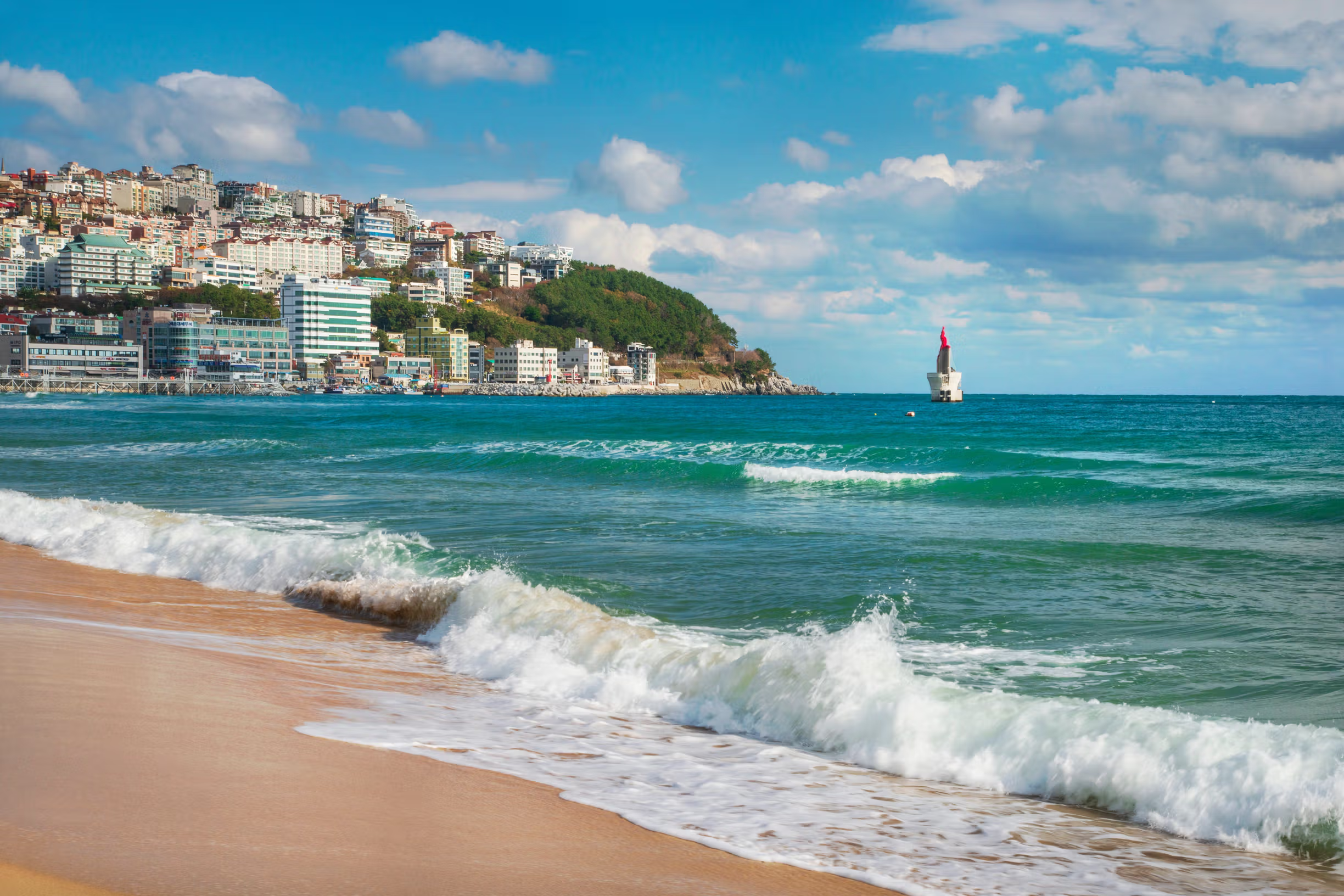
A tapestry of kaleidoscopic colors, intense seafood flavors, and urban beach bliss, Busan rolls across a glorious natural setting on the Korean Peninsula’s southeast. One of the biggest and busiest ports in the world, 3.5 million people call South Korea’s second city home, and the amiable locals help to lend the city its quirky, offbeat outlook. A spacious, playful, and cosmopolitan place, Busan is a lively, livable city, cradled by lush mountains and endless ocean scenery. Haedong Yonggung Temple nestles on a dramatic cliffside, just above the crumbling rocks and crashing waves of the East Sea. Dating back to 1376, the temple’s multi-story pagoda is adorned with lions – each representing a different emotion. Elsewhere, lanterns glitter in the night sky around Mount Geumjeongsan, freshly released from the beautiful Beomeosa Temple, which was established in AD 678.
The hillside shantytown of Gamcheon Culture Village has completed an improbable transformation, blossoming from a sea of makeshift homes for Korean war refugees, into a colorful explosion of creativity and curiosity. Local artists have been let loose to create interactive installations, and the entire area is now an expansive canvas for expression. Lose yourself among vibrant alleyways of flamingo-pink, lemon-yellow, and baby-blue painted facades in this unique area. Sample bibimbap, fiery-hot beef, and rice, from street food vendors, before relaxing on one of South Korea’s best beaches – Haeundae’s banana bend of sand. Metallic skyscrapers offer an unusual backdrop to this pristine expanse of golden powder and are mirrored by elaborate sandcastles and sculptures during the annual sand festival – when spontaneous water fights and firework displays also take place. Gwangalli Beach is another urban option, laying out spectacular views of the reaching Gwangan Bridge – the country’s second largest bridge. At night, 16,000 bulbs bathe this “engineering marvel in color.”
DAY 9 – DAY AT SEA
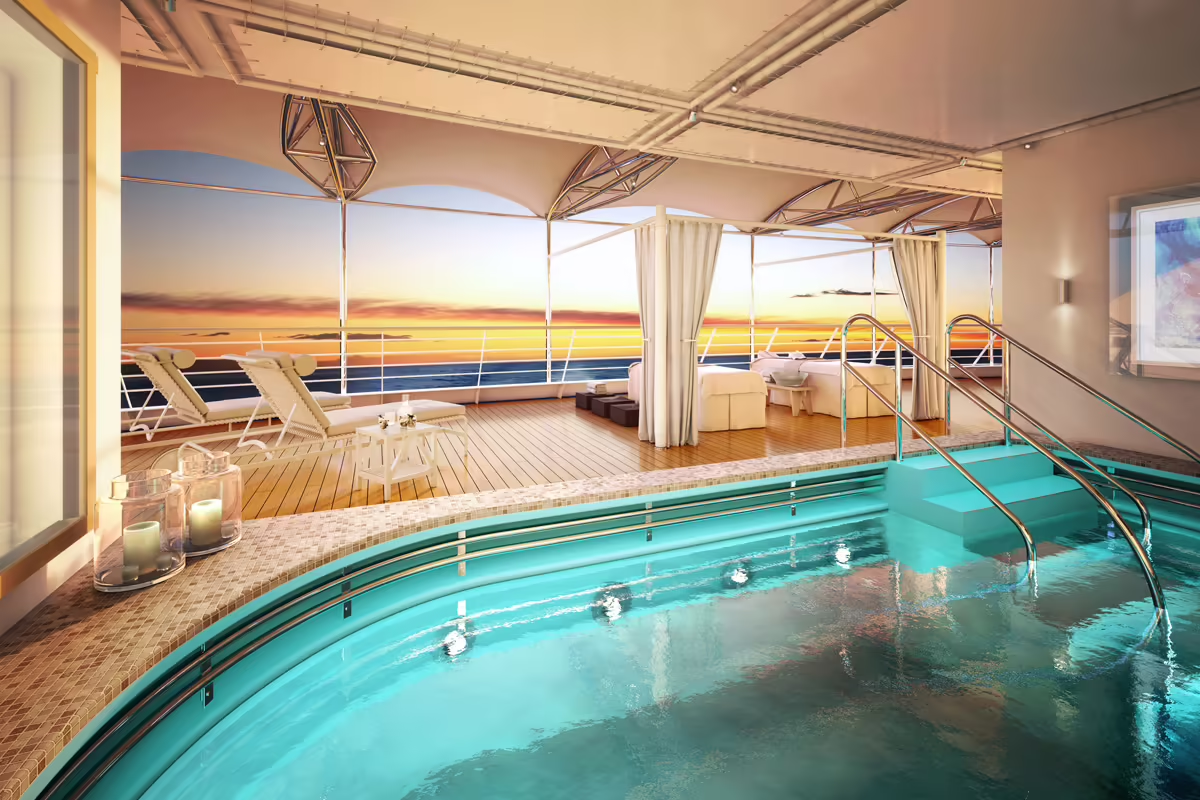
Days at sea are the perfect opportunity to relax, unwind, and catch up with what you’ve been meaning to do. So whether that is going to the gym, visiting the spa, whale-watching, catching up on your reading, or simply topping up your tan, these blue sea days are the perfect balance to busy days spent exploring shoreside.
DAY 10 – KANAZAWA, JAPAN
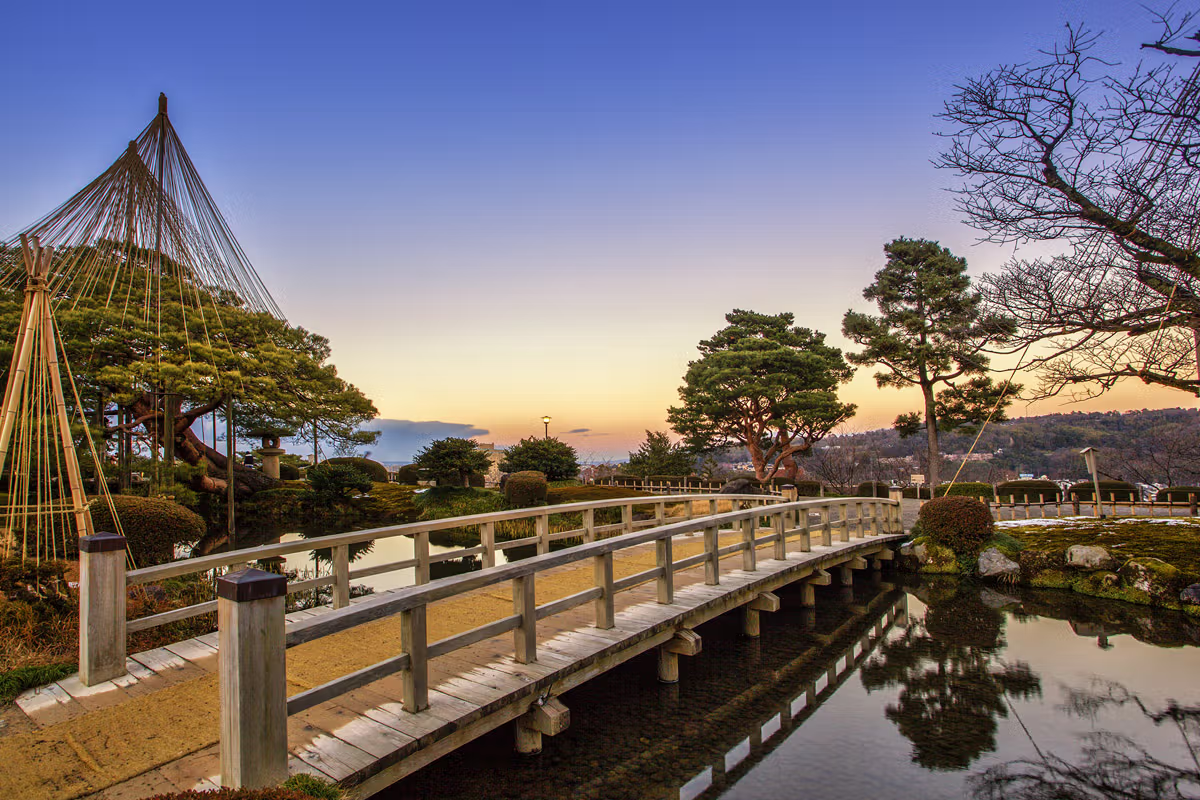
The capital of the Ishikawa Prefecture, Kanazawa once rivaled Kyoto and Edo (Tokyo) as a town rich in cultural achievements. Kanazawa escaped destruction during World War II and accordingly has been able to preserve many of the old districts in good shape. The city is famous because of Kenrokuen. Located next to Kanazawa Castle, Kenrokuen is classified as “One of the Three Gardens of Japan”. The garden has an artificial pond, and hills and houses are dotted within the 11.4 hectares. It has Japan’s oldest fountain using natural water pressure and a teahouse dating back to 1774. Close by is the Higashi Chaya Gai Geisha District, designated a National Cultural Asset and the biggest of the Geisha districts of Kanazawa. Some of the houses not only retain the original structure but still are used as Geisha houses. Some of the streets have traditional shops creating a nostalgic atmosphere. Kanazawa is also known for its lacquer ware, Kutani-style pottery, gold-leaf workmanship, and delicately painted silk kimonos.
The capital of the Ishikawa Prefecture, Kanazawa once rivaled Kyoto and Edo (Tokyo) as a town rich in cultural achievements. Kanazawa escaped destruction during World War II and accordingly has been able to preserve many of the old districts in good shape. The city is famous because of Kenrokuen. Located next to Kanazawa Castle, Kenrokuen is classified as “One of the Three Gardens of Japan”. The garden has an artificial pond, and hills and houses are dotted within the 11.4 hectares. It has Japan’s oldest fountain using natural water pressure and a teahouse dating back to 1774. Close by is the Higashi Chaya Gai Geisha District, designated a National Cultural Asset and the biggest of the Geisha districts of Kanazawa. Some of the houses not only retain the original structure but still are used as Geisha houses. Some of the streets have traditional shops creating a nostalgic atmosphere. Kanazawa is also known for its lacquer ware, Kutani-style pottery, gold-leaf workmanship, and delicately painted silk kimonos.
DAY 11 – DAY AT SEA
Days at sea are the perfect opportunity to relax, unwind, and catch up with what you’ve been meaning to do. So whether that is going to the gym, visiting the spa, whale-watching, catching up on your reading, or simply topping up your tan, these blue sea days are the perfect balance to busy days spent exploring shoreside.
DAY 12 – HAKODATE (HOKKAIDO), JAPAN
Gaze down over Hakodate, from the heights of its namesake peak – Mount Hakodate – to see the city stretching out spectacularly, with back-to-back twin bays splitting the ocean. Hakodate port was one of the first to open Japan up to the world and to international trade in 1859 – a fact reflected in the architecture, with its influences from the West and beyond. The port area is a redbrick wash of warehouses turned shopping malls, all observed by the onion domes of the city’s Russian Orthodox church. Elsewhere, the star-shaped Goryokaku fortress glows with natural colors and a beautiful haze of cherry blossoms during the season. Goryokaku Tower, which rises up beside it, offers a sweeping bird’s eye view of the green fortress and mountain backdrop.
Buses trundle up the 335-meter incline to the top of Mount Hakodate, but the best way to reach the views is to jump on the ropeway, which swings high above downtown’s buildings, over a carpet of pine trees. Head up to the mountain’s heights as sunset approaches. With darkness sweeping in, and the lights flickering to life, the panorama is one of Japan’s most spectacular. Soak it all in, and look out to the horizon, dotted with the shimmering lights of ships hauling in harvests of the city’s renowned squid. The plankton-rich waters attract a delicious variety of feasting sea life to Hakodate’s coast, which is then plated up in the city’s numerous, skilled restaurants. For an eye-opening, whirring morning, see the freshest produce being doled out at Hakodate Morning Market – amid a cacophony of noise and activity.
DAY 13 – MIYAKO, IWATE, JAPAN
Set on the eastern coast in Japan’s Iwate prefecture, Miyako promises stunning scenery and Jorman history in equimeasure. The coastal city of around 50,000 inhabitants is almost 600 km (372 miles) from Tokyo, but boasts one of the finest beaches in Japan, as well as a treasure trove of succulently fresh seafood restaurants. While travelers to Miyako might arrive expecting the usual amalgam of cultural attractions and high-tech wizardry, they will leave with memories of one of the greatest garden cities they have ever experienced.
During the Edo period (1603-1868) the town was once considered as Japan’s main seaport, and it is still an important port today with a thriving fishing industry. Mother Nature really does come into her own in Miyako. The city is bordered by the vast Sanriku Fukkō National Park, one of the National Parks of Japan. Sanriku Fukkō stretches for 180 km (111 miles) along the coast and home a wonderful variety of flora and fauna, including groves of Japanese red pine, rhododendrons, and Rosa rugosa. Numerous bird species, including the black-tailed gull and shearwater, call the park home. Butterflies float gently on the breeze and hummingbirds sail like darts through the trees. What’s more, bird lovers will undoubtedly love that the nearby Hidejima Island and Sanganjima Island are the only breeding grounds in Japan for the band-rumped storm-petrel.
DAY 14 – DAY AT SEA
Days at sea are the perfect opportunity to relax, unwind, and catch up with what you’ve been meaning to do. So whether that is going to the gym, visiting the spa, whale-watching, catching up on your reading, or simply topping up your tan, these blue sea days are the perfect balance to busy days spent exploring shoreside.
DAY 15 – TOKYO, JAPAN
Dense and delightful, there’s nowhere else like Japan’s kinetic capital – a city where ancient traditions blend seamlessly with a relentless pursuit for the future’s sharpest edge. See the city from above, as elevators rocket you up to towering viewing platforms, from which you can survey a vast urban ocean, interspersed with sky-scraping needles. Look out as far as the distant loom of Mount Fuji’s cone on clear days.